
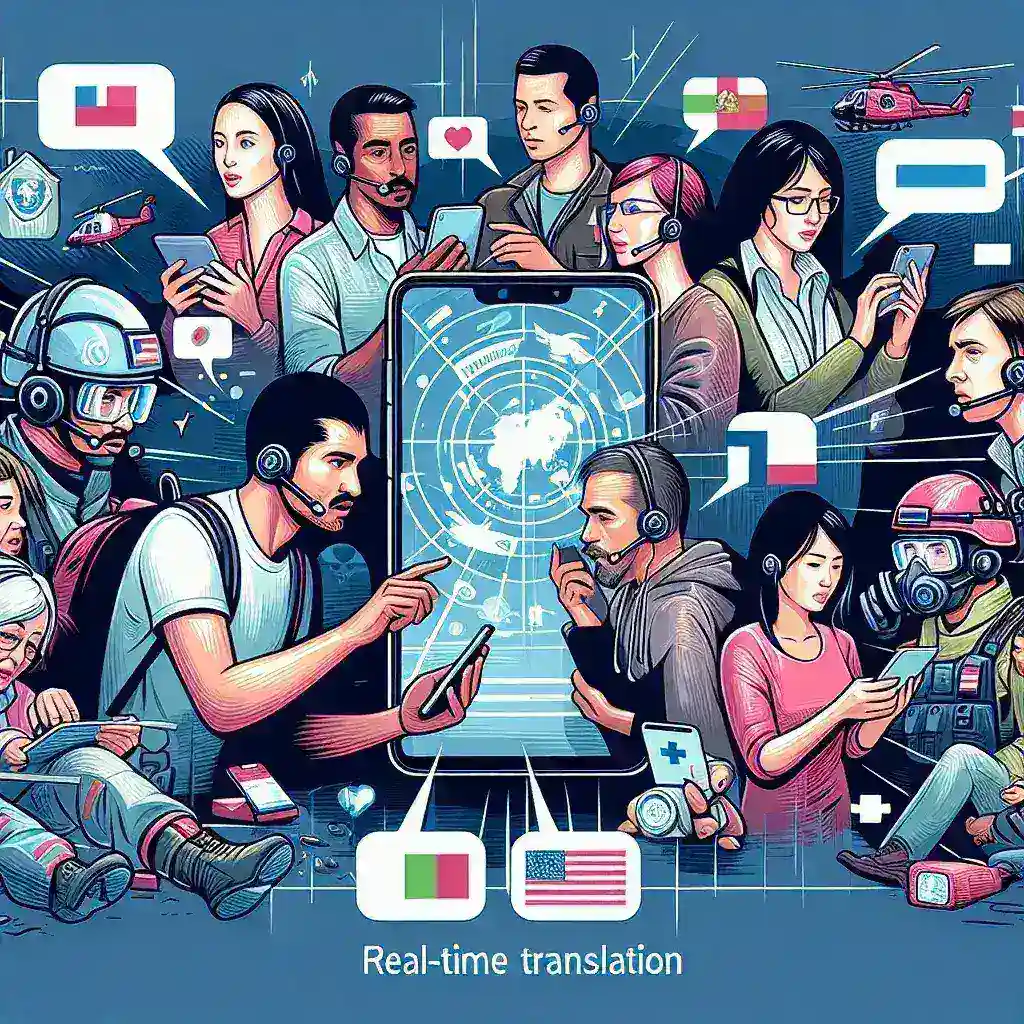
The Role of Translation Tools in Humanitarian Aid
In an increasingly interconnected world, the necessity for effective communication in emergency situations cannot be overstated. Cross-border aid efforts often involve diverse linguistic groups; thus, real-time translation tools have emerged as a vital resource. These tools not only bridge communication gaps but also enhance the efficiency of humanitarian responses during crises.
Historical Context of Translation in Emergency Situations
The use of translation in humanitarian efforts has evolved significantly over the decades. Historically, aid organizations relied on bilingual volunteers and interpreters. However, limitations in speed and availability often hampered response times. With advancements in technology, the introduction of real-time translation tools has revolutionized how aid is delivered.
Significant Milestones
- World War II: The need for effective communication led to the development of military translation units.
- 1990s: The internet era saw the emergence of early translation software, laying the groundwork for today’s tools.
- 2020s: AI-driven applications are now capable of providing instantaneous translations, significantly reducing the time needed to relay critical information.
How Real-time Translation Tools Function
Real-time translation tools use a combination of artificial intelligence, machine learning, and linguistic databases to convert spoken or written language instantly. These tools analyze the context and provide translations that are not only accurate but also culturally sensitive. They can be deployed through mobile applications, web platforms, or specialized devices, making them accessible in various scenarios.
Common Features
- Speech Recognition: Converts spoken words into text for translation.
- Contextual Understanding: Uses algorithms to understand the meaning behind phrases.
- Multi-language Support: Offers translations across numerous languages and dialects.
Case Studies: Successful Implementations
Several organizations have successfully integrated real-time translation tools into their emergency response frameworks.
Example 1: Refugee Assistance
During the recent refugee crisis, organizations like the United Nations High Commissioner for Refugees (UNHCR) utilized mobile translation apps to facilitate communication between aid workers and refugees from diverse backgrounds. This led to a more streamlined process for distributing necessities such as food and medical supplies.
Example 2: Disaster Response
In the wake of natural disasters such as earthquakes or floods, real-time translation tools have been crucial. For instance, after a significant earthquake in a multilingual region, local NGOs used translation technology to coordinate with international teams, ensuring that resources were allocated efficiently.
Challenges and Limitations
Despite their advantages, real-time translation tools are not without challenges. Issues such as connectivity, cultural nuances, and the limitations of AI must be addressed to enhance their effectiveness.
Connectivity Issues
In remote areas affected by disasters, internet connectivity can be unreliable. This presents a significant hurdle for tools relying on cloud services.
Cultural Sensitivity
Translation is not just about converting words; it involves cultural context. Tools must be designed to recognize and interpret local customs and idioms to avoid misunderstandings.
The Future of Translation Tools in Emergency Aid
The potential of real-time translation tools in humanitarian efforts is vast. As technology continues to evolve, we can anticipate several advancements that will further enhance their capabilities.
Predictive Linguistic Models
Future translation tools are likely to utilize predictive models that anticipate user needs based on historical data, allowing for even faster and more accurate translations.
Integration with Other Technologies
Combining translation tools with augmented reality (AR) and virtual reality (VR) could provide immersive training for aid workers, preparing them for on-the-ground challenges.
Conclusion
In conclusion, real-time translation tools hold the key to unlocking effective communication in cross-border emergency aid. As these technologies continue to develop, they will play an increasingly pivotal role in ensuring that aid reaches those who need it most, regardless of language barriers. The investment in and integration of these tools can ultimately save lives and foster global cooperation in times of crisis.
Leave a Reply